
How to Pass the Semmelweis Entrance Exam
In short.
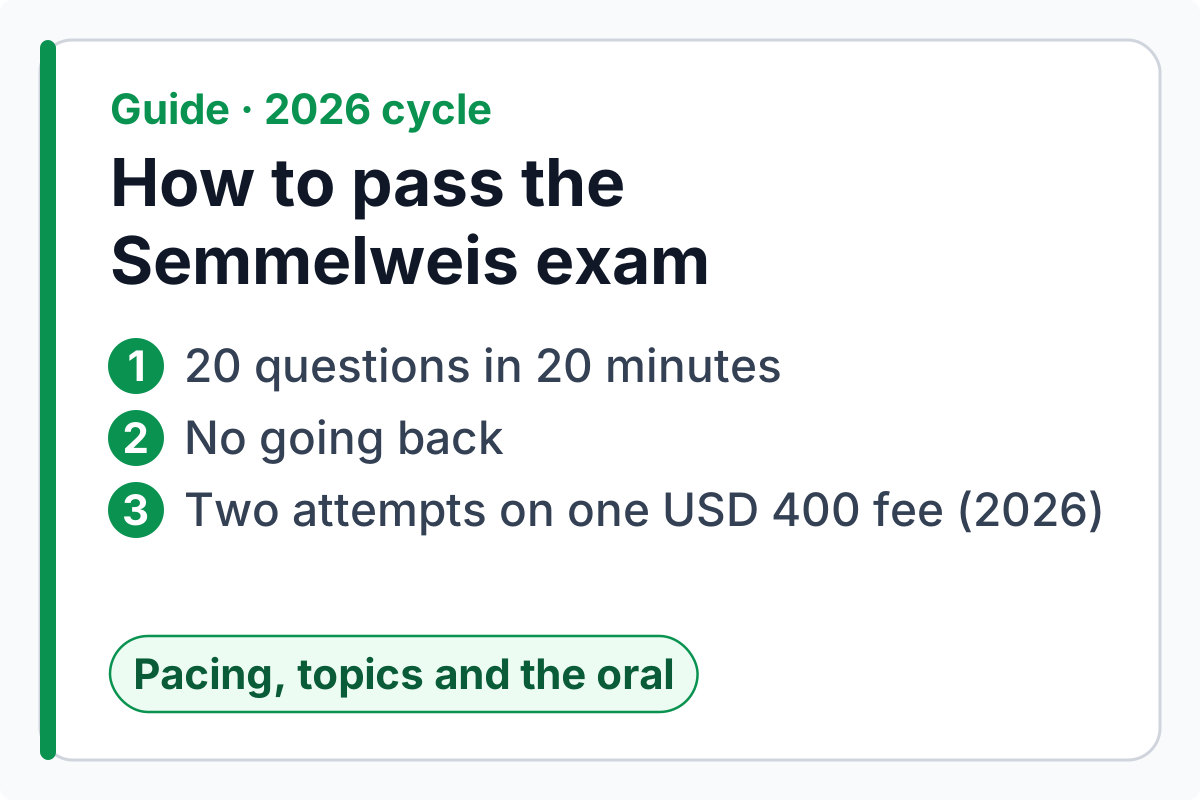
- You sit four online tests from home, 20 questions in 20 minutes each.
- Questions come in a fixed order. You cannot go back.
- A wrong answer loses part of a point. There is no published pass mark.
- Learn all 27 biology and 23 chemistry topics. Then practise at exam speed.
- Prepare the oral as a real science exam.
The facts below are from the 2026 cycle. Check them on the university's entrance exam page before you apply.
Want every official topic as a checklist? The free PDF has boxes to tick for each one. Get the free checklist
How the four tests work
You sit four short tests online, from home:
- Medical Biology
- Medical Chemistry
- General English
- Biomedical English
Each test has 20 questions in 20 minutes. The official rule is that you answer the questions in the given order. So you cannot go back to a question.
After the tests comes a personal interview with an oral exam. More on that below.
The university then looks at everything together. It weighs your tests, the interview, your school record, your motivation and your spoken English.
What a wrong answer costs
This is the official scoring:
- A correct answer is worth one point.
- A wrong answer loses part of a point.
- Semmelweis does not say how much.
- It publishes no pass mark.
So nobody can tell you when a guess pays.
You cannot come back later either. A 2026 applicant on Reddit said skipped questions could not be reached again.
Our tips, not a university rule:
- Decide on each question before you move on.
- Narrow it down first. An answer you can narrow down is a better bet than a blind guess.
- Keep moving. 20 questions in 20 minutes goes fast.
- Practise at that speed before exam day.
The official topics: 27 + 23
Semmelweis publishes two topic lists:
- Medical Biology, 27 topics: the molecules of life, enzymes and genes, energy, cells and signals, hormones and body systems, immunity and viruses.
- Medical Chemistry, 23 topics: general and physical chemistry (atoms to reaction rates), then organic chemistry and biomolecules.
The official lists cover biology and chemistry only, not the two English tests.
Both lists go past most school courses. Three examples:
- Allostery: a molecule binds one part of a protein and changes how another part works.
- Kinase cascades: a chain of enzymes that passes a signal through the cell.
- Standard reduction potentials: how strongly a substance takes up electrons.
Other topics can also be harder than your school course. So check each topic against your own syllabus.
Download the official topic list (PDF). Our Semmelweis sample-test guide has every topic in a table to tick.
A three-step plan
- Learn each official topic. Work from the list, not from old questions. Tick "Know" when you know a topic.
- Explain it out loud. Teach it to a friend, or to yourself. Tick "Explain" when you can. This also trains you for the oral.
- Then do timed sets of 20. Give yourself 20 questions in 20 minutes, in order, with no going back. Tick "Revise" for every topic you got wrong.
Want to try the format now? Answer our 5 free sample questions in the Semmelweis style.
Our practice gives you timed sets in biology and chemistry, at the real pace. Every question will have an explanation. It is not open yet: see when practice opens.
Exam day: the tech
This is the official setup:
- You sit the tests on Moodle, the university's online exam platform.
- You need Safe Exam Browser, a locked browser for online exams.
- Zoom watches you, with your camera and microphone on.
Applicants on Reddit shared these lessons from 2024 to 2026:
- Reopen Safe Exam Browser for each test. If you do not, it can show a configuration error.
- Run Zoom on a second device. Safe Exam Browser closes Zoom on the same computer.
- Use a computer. Safe Exam Browser does not run on phones.
- Set the language. Choose English in Moodle, or it may switch to Hungarian.
- Restart after a key error. If Safe Exam Browser shows an error about its keys, close it and open it again.
- Stay on Zoom. A 2024 applicant quoted the university's warning: a test taken without Zoom supervision is invalid and scores zero.
In 2026, one applicant could not get the software to work on exam day. So install and test everything a few days before.
Two sittings on one fee
The USD 400 fee covers your application and up to two exam sittings (2026 cycle). You may sit at most two exams in one calendar year.
So prepare to pass at your first sitting. Use the second sitting only if you need it.
Waitlisted after your first sitting? A 2024 applicant on Reddit quoted their waitlist letter. It said: stay on the list for a decision by the end of July, or sit again. Ask the university in writing what applies to you.
Our tip for booking: book soon after you apply. In April 2026, one applicant paid the fee and found every online date taken. Then pick a date when you will have finished your timed sets.
The oral is a science exam
After the written tests comes a personal interview. It looks at your attitude and your motivation for medicine. It also includes an oral exam on your subject knowledge. The oral is in person by default, with an online option.
Applicants describe a real exam:
- A 2024 applicant called it more an oral exam than an interview. They were asked the pH of a 0.001 mol/L solution.
- Another 2024 applicant described two biology and two chemistry questions.
- In 2025, one applicant was shown cholesterol, red blood cells in different solutions and enzyme graphs. They also had a dilution calculation.
- Another 2025 applicant said four in five questions used a diagram or image.
- Another 2025 applicant was asked about mitochondria, nerves, protein structure and buffers in blood.
- "Why Semmelweis?" came up too (2025).
A 2024 applicant gave good advice. Say your thinking out loud. Name the key words, even if you are not sure.
Our practice will not simulate the oral. So practise out loud. Here is one question from those reports, with our model answer.
What is a buffer, and why does blood need one?
- A buffer is a mix of a weak acid and its conjugate base.
- It keeps the pH almost the same when a little acid or base is added.
- If acid is added, the base part takes up the extra H⁺ ions.
- If base is added, the weak acid gives up H⁺ ions.
- In blood, the main buffer is carbonic acid and bicarbonate.
- It keeps blood pH close to 7.4, which our enzymes need.
This model answer is ours, written by HungaryMedPrep. It is not from the university.
When to apply
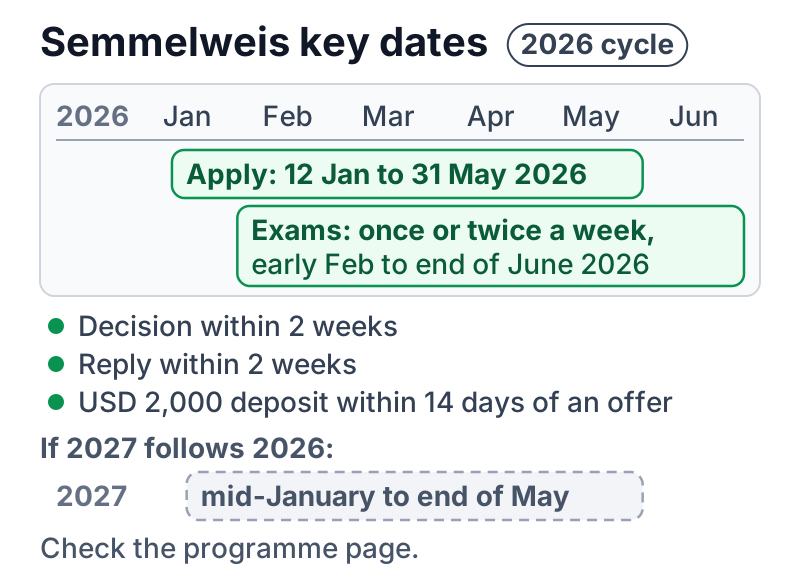
These were the dates in the 2026 cycle:
- Applications: 12 January to 31 May 2026, on SEMAPHOR, the university's online application portal.
- Exam dates: once or twice a week, from early February to the end of June. You pick a date after you apply.
- Decision: within two weeks of your exam. You then have two weeks to reply to an offer.
- Deposit: USD 2,000 within 14 days of an offer. It is non-refundable and counts toward your first semester.
If 2027 follows 2026, applications run from mid-January to the end of May. Check the programme page for the 2027 dates.
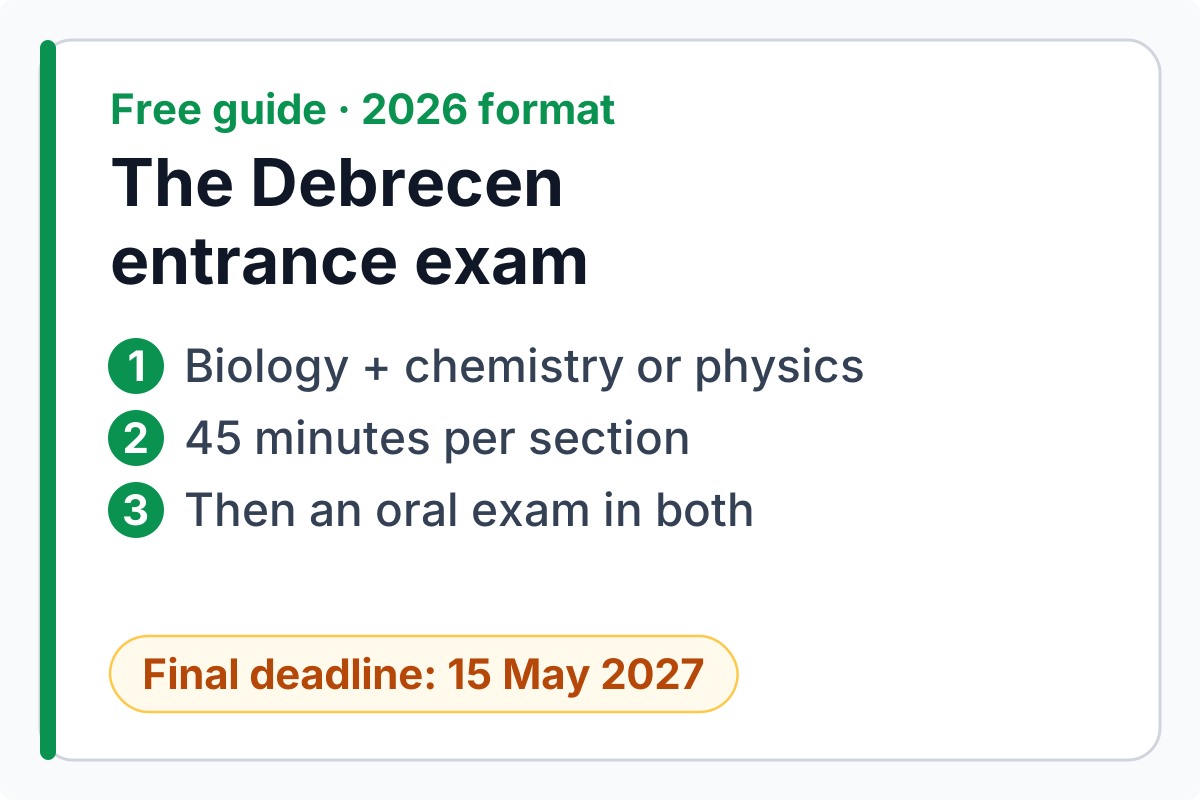
Applying to Debrecen too? Its final deadline is 15 May 2027. See the Debrecen sample test vs the real exam.
Free by email
Preparing for Semmelweis?
Get the free topic checklist PDF. Debrecen is in it too.
- Every official biology and chemistry topic, with boxes to tick. Plus our 6 free guides.
- Also in the PDF: oral topics applicants report, and hard words explained.
More free guides
All free guides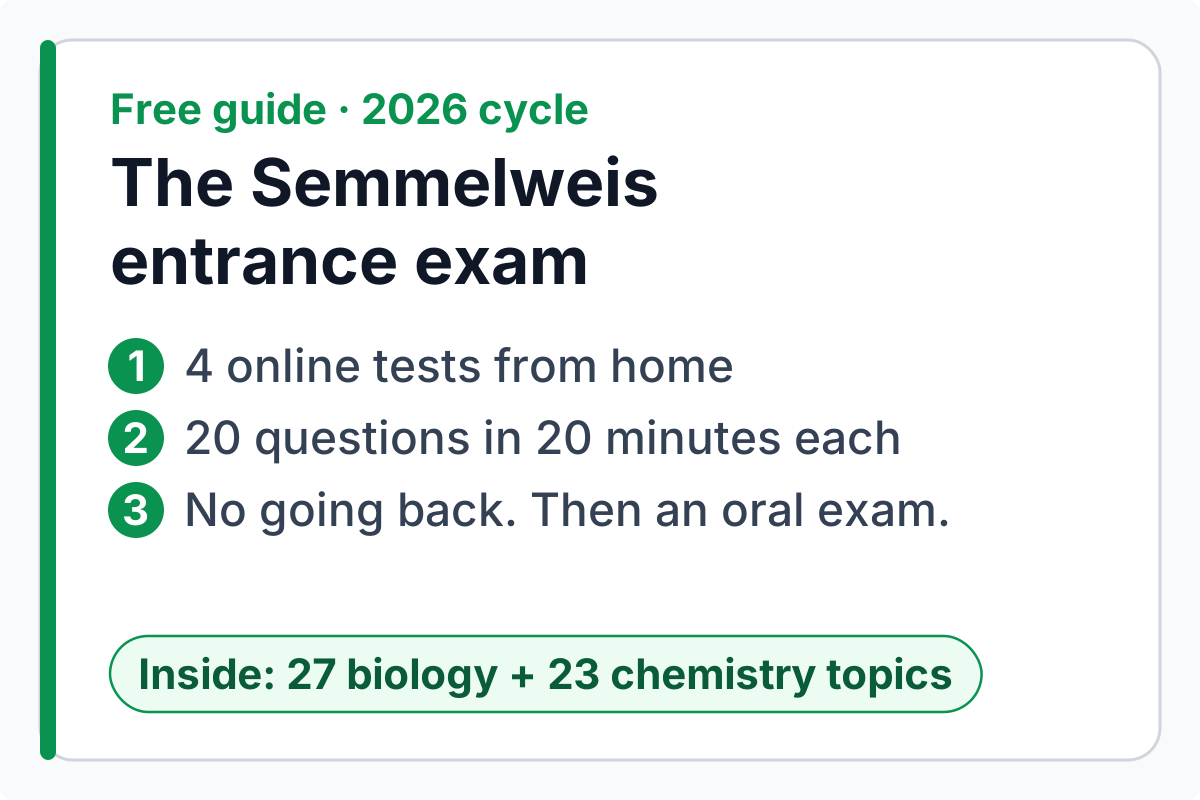
Is There a Semmelweis Sample Test?
Is there a Semmelweis sample test or past papers? The 27 + 23 official topics as a checklist, what applicants say is hard, and Semmelweis vs Debrecen.
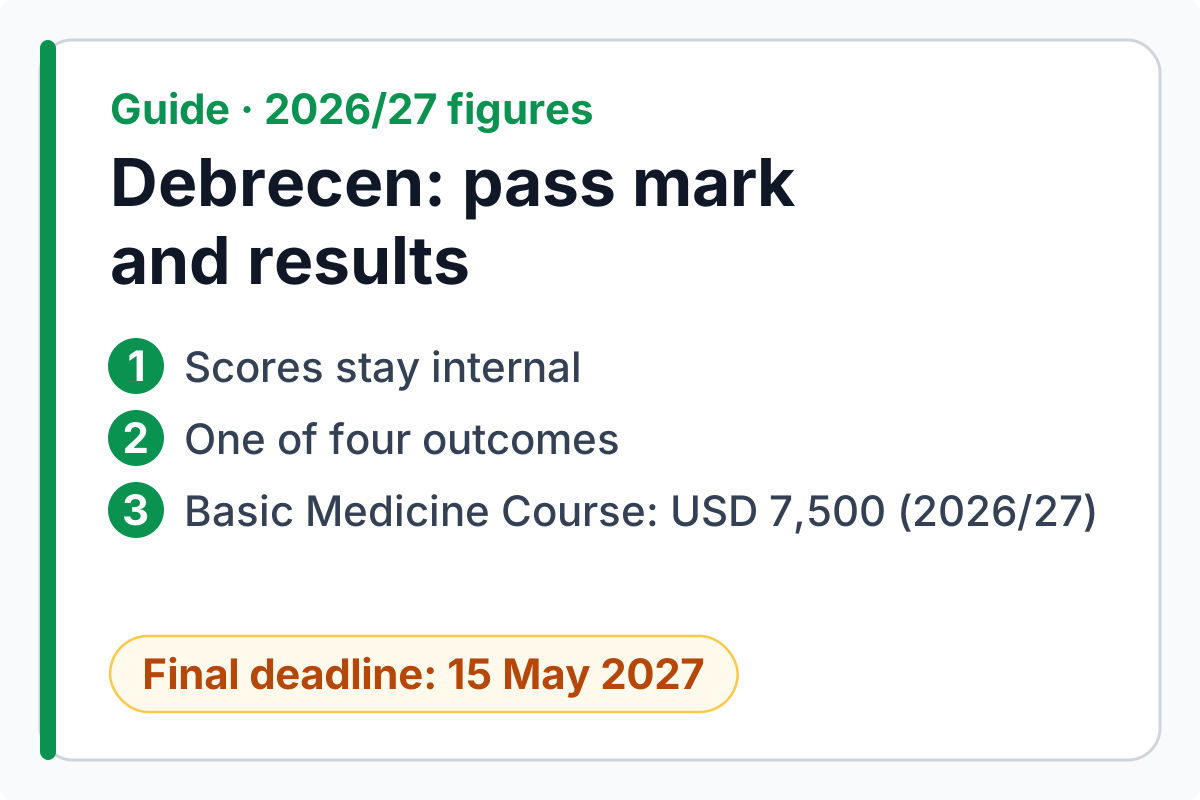
Debrecen Entrance Exam: Pass Mark and Results
Is there a Debrecen pass mark? Scores stay internal and you get one of four outcomes. What the Basic Medicine Course costs, and how to be ready for 2027.
Debrecen Entrance Exam: Sample Test vs Real Exam
Debrecen's official sample tests, what applicants say the real biology paper is like, the 16 biology topics as a checklist, and why to apply early for 2027.