
The Semmelweis Topic List, as a Checklist
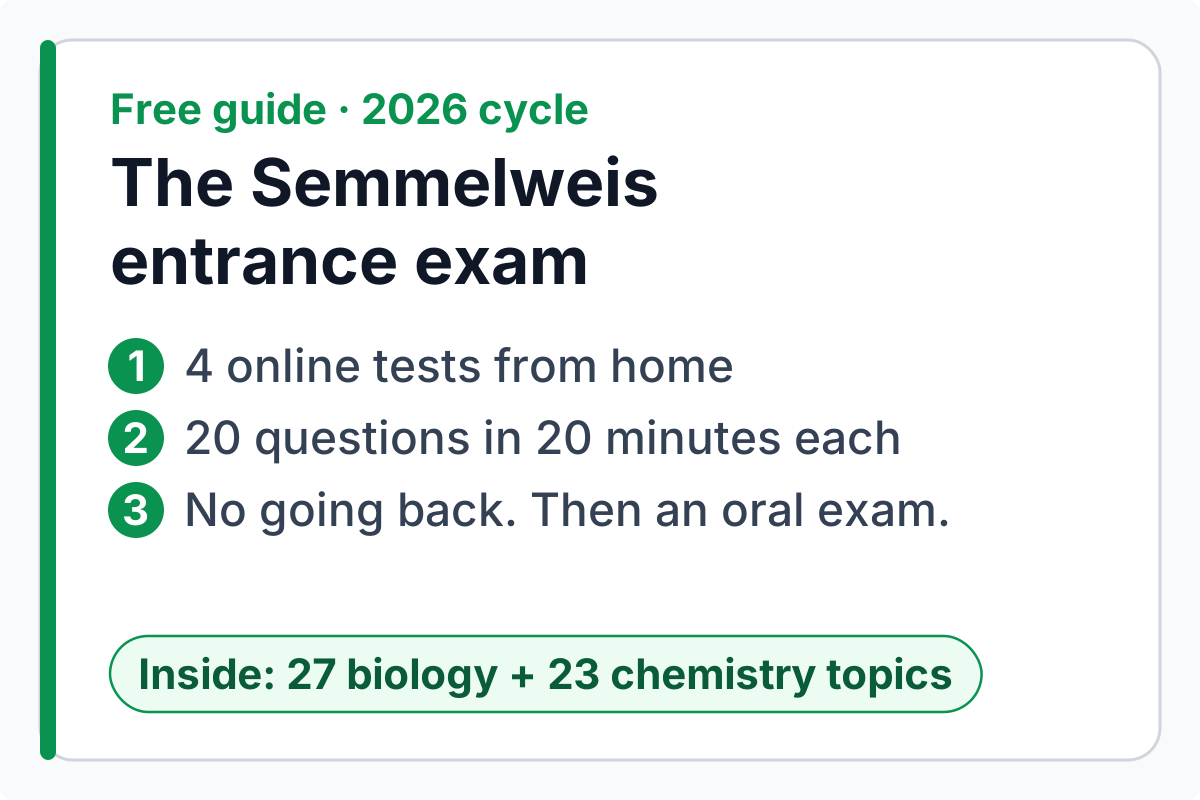
In short. Semmelweis publishes two official topic lists for its entrance exam: 27 topics in Medical Biology and 23 in Medical Chemistry. There is no official list for the two English tests. Some topics go past most school courses. Below is every topic, in the university's own numbering, as a checklist to tick.
Want this checklist as a PDF? The free PDF has:
- every official biology and chemistry topic, with boxes to tick
- hard words explained
- oral topics applicants report
The topics below are from the university's official topic list, checked in October 2026. Download the official topic list (PDF).
What is on the Semmelweis topic list?
The written exam has four tests: Medical Biology, Medical Chemistry, General English and Biomedical English. Each test has 20 questions in 20 minutes. The topic list covers the first two.
Medical Biology, 27 topics:
- Topics 1 to 5: the molecules of life (proteins, sugars, lipids, nucleic acids, vitamins)
- Topics 6 to 9: enzymes and genes, from DNA copying to protein making
- Topics 10 and 11: energy from glucose
- Topics 12 to 14: the origin of life and the parts of a cell
- Topics 15 and 16: inheritance and cell division
- Topics 17 and 18: cell signals and hormones
- Topics 19 to 25: body systems (heart, lungs, gut, kidney, muscle, nerves, reproduction)
- Topics 26 and 27: immunity and viruses
Medical Chemistry, 23 topics:
- Topics 1 to 13: general and physical chemistry, from atoms to reaction rates
- Topics 14 to 23: organic chemistry and the molecules of life
A calculator is allowed in the Medical Chemistry test.
The official PDF gives the topic titles only, with no explanations. So we added short explanations of the hard words in the tables below.
Is there a topic list for the English tests?
No. The official topic lists cover biology and chemistry only. Yet two of the four written tests are English tests: 40 of the 80 written questions.
The university adds that you need the English terms in all these areas. So learn each topic in English, not only in your own language.
One 2025 applicant on Reddit said Biomedical English tested basic medical words. See our starter word list.
Which topics go past school level?
The lists are called Medical Biology and Medical Chemistry. Some topics go further than most school courses. Three examples, marked ★ in the tables:
- Allostery (biology 1): a molecule binds one part of a protein and changes how another part works.
- Kinase cascades (biology 17): a chain of enzymes that passes a signal through the cell.
- Standard reduction potentials (chemistry 9): how strongly a substance takes up electrons.
Other topics can also be harder than your school course. So check every topic yourself.
First, check the list against your own course. Open your school syllabus (IB, A-level or national) next to this list. Mark every topic it does not cover. Start with those.
Does the exam stick to the list? Not always, say some applicants. In 2026, applicants on Reddit described a few questions beyond the topic list, and some tricky ones. So treat the list as the minimum. More reports are in the Semmelweis sample test article.
How to use the checklist
Each topic has three boxes:
- Know: tick when you know the topic.
- Explain: tick when you can explain it out loud.
- Revise: tick topics you must go back to.
The Explain box matters. After the written tests comes an interview with an oral exam on your subject knowledge. So practise every topic out loud. See the oral is a science exam.
Then test yourself at exam speed: 20 questions in 20 minutes, in order, with no going back. See how to prepare: a three-step plan.
The titles below are short versions of the official ones.
Medical biology: 27 topics
| Topic | Know | Explain | Revise |
|---|---|---|---|
| 1. Proteins: the four levels of structure, allostery ★ | ☐ | ☐ | ☐ |
| 2. Polysaccharides, glycoproteins and proteoglycans (proteins with sugar chains) | ☐ | ☐ | ☐ |
| 3. Glycerolipids: triglycerides and phospholipids | ☐ | ☐ | ☐ |
| 4. Nucleic acids, chromosomes, genes, the genetic code | ☐ | ☐ | ☐ |
| 5. Vitamins and their active forms | ☐ | ☐ | ☐ |
Show topics 6 to 27
| Topic | Know | Explain | Revise |
|---|---|---|---|
| 6. Enzyme inhibition and the control of enzymes | ☐ | ☐ | ☐ |
| 7. DNA replication and DNA repair | ☐ | ☐ | ☐ |
| 8. Transcription and its control | ☐ | ☐ | ☐ |
| 9. mRNA processing and translation | ☐ | ☐ | ☐ |
| 10. Glucose oxidation, with and without oxygen | ☐ | ☐ | ☐ |
| 11. Citrate cycle and oxidative phosphorylation | ☐ | ☐ | ☐ |
| 12. Origin of life, prokaryotic cells, bacterial diseases | ☐ | ☐ | ☐ |
| 13. Organelles I: nucleus, nucleolus, mitochondria | ☐ | ☐ | ☐ |
| 14. Organelles II: ER, Golgi, lysosomes | ☐ | ☐ | ☐ |
| 15. Mendel's laws, sex-linked and mitochondrial inheritance | ☐ | ☐ | ☐ |
| 16. Cell cycle checkpoints and growth factors | ☐ | ☐ | ☐ |
| 17. Cell signals: receptors, G proteins, second messengers, kinases ★ | ☐ | ☐ | ☐ |
| 18. Hormones: endocrine, paracrine (on nearby cells) and autocrine (on the cell itself) effects | ☐ | ☐ | ☐ |
| 19. The heart and the cardiac cycle | ☐ | ☐ | ☐ |
| 20. Breathing, gas exchange and gas transport | ☐ | ☐ | ☐ |
| 21. Digestion and absorption | ☐ | ☐ | ☐ |
| 22. The kidney and the nephron | ☐ | ☐ | ☐ |
| 23. Muscle contraction and the three muscle types | ☐ | ☐ | ☐ |
| 24. Nerve cells: resting and action potential | ☐ | ☐ | ☐ |
| 25. Reproduction, sex hormones and meiosis | ☐ | ☐ | ☐ |
| 26. Immunity: T and B cells, MHC (proteins that show antigens), antibodies, vaccination | ☐ | ☐ | ☐ |
| 27. Viruses: structure, replication, reverse transcription (DNA made from RNA) | ☐ | ☐ | ☐ |
Medical chemistry: 23 topics
| Topic | Know | Explain | Revise |
|---|---|---|---|
| 1. Atoms, orbitals and electron configuration | ☐ | ☐ | ☐ |
| 2. Chemical bonds and weaker interactions | ☐ | ☐ | ☐ |
| 3. Water and its properties | ☐ | ☐ | ☐ |
| 4. Solutions and concentration | ☐ | ☐ | ☐ |
| 5. Solubility and the solubility product | ☐ | ☐ | ☐ |
Show topics 6 to 23
| Topic | Know | Explain | Revise |
|---|---|---|---|
| 6. Acids, bases and pH | ☐ | ☐ | ☐ |
| 7. Equilibrium, Le Chatelier's principle, buffers | ☐ | ☐ | ☐ |
| 8. Redox reactions and voltaic cells | ☐ | ☐ | ☐ |
| 9. Standard reduction potentials ★ | ☐ | ☐ | ☐ |
| 10. Iron, its ions and heme (the iron group in haemoglobin) | ☐ | ☐ | ☐ |
| 11. Reaction heat: exothermic and endothermic | ☐ | ☐ | ☐ |
| 12. Entropy and free enthalpy (Gibbs free energy, ΔG) | ☐ | ☐ | ☐ |
| 13. Reaction rates, activation energy, catalysts | ☐ | ☐ | ☐ |
| 14. Hydrocarbons and aromatic compounds | ☐ | ☐ | ☐ |
| 15. Alcohols and phenols | ☐ | ☐ | ☐ |
| 16. Aldehydes, ketones and carboxylic acids | ☐ | ☐ | ☐ |
| 17. Amines and imines (compounds with a C=N bond) | ☐ | ☐ | ☐ |
| 18. Esters, ethers, amides, anhydrides, phosphate esters | ☐ | ☐ | ☐ |
| 19. Sulfur in biomolecules: thiols, thioesters (esters with sulfur in place of an oxygen), disulfides | ☐ | ☐ | ☐ |
| 20. Steroids and cholesterol | ☐ | ☐ | ☐ |
| 21. Monosaccharides and disaccharides | ☐ | ☐ | ☐ |
| 22. Amino acids and the peptide bond | ☐ | ☐ | ☐ |
| 23. Nucleotides, nucleic acids and base pairing | ☐ | ☐ | ☐ |
Get all 50 topics as a printable PDF. It also has:
- Debrecen's biology and chemistry lists
- oral topics applicants report
What else to read
- Books: the university's Medicine page points to its entrance exam page for subjects, recommended books and sample tests.
- The official sample test: 10 questions in 10 minutes, in Safe Exam Browser. See the Semmelweis sample test.
- Past papers: Semmelweis does not publish any. See what the paid "past paper" files are.
- The whole school: fees, dates and the oral are on our Semmelweis page.
Free by email
Preparing for Semmelweis?
Get the free topic checklist PDF. Debrecen is in it too.
- Every official biology and chemistry topic, with boxes to tick. Plus our 6 free guides.
- Also in the PDF: oral topics applicants report, and hard words explained.
More free guides
All free guides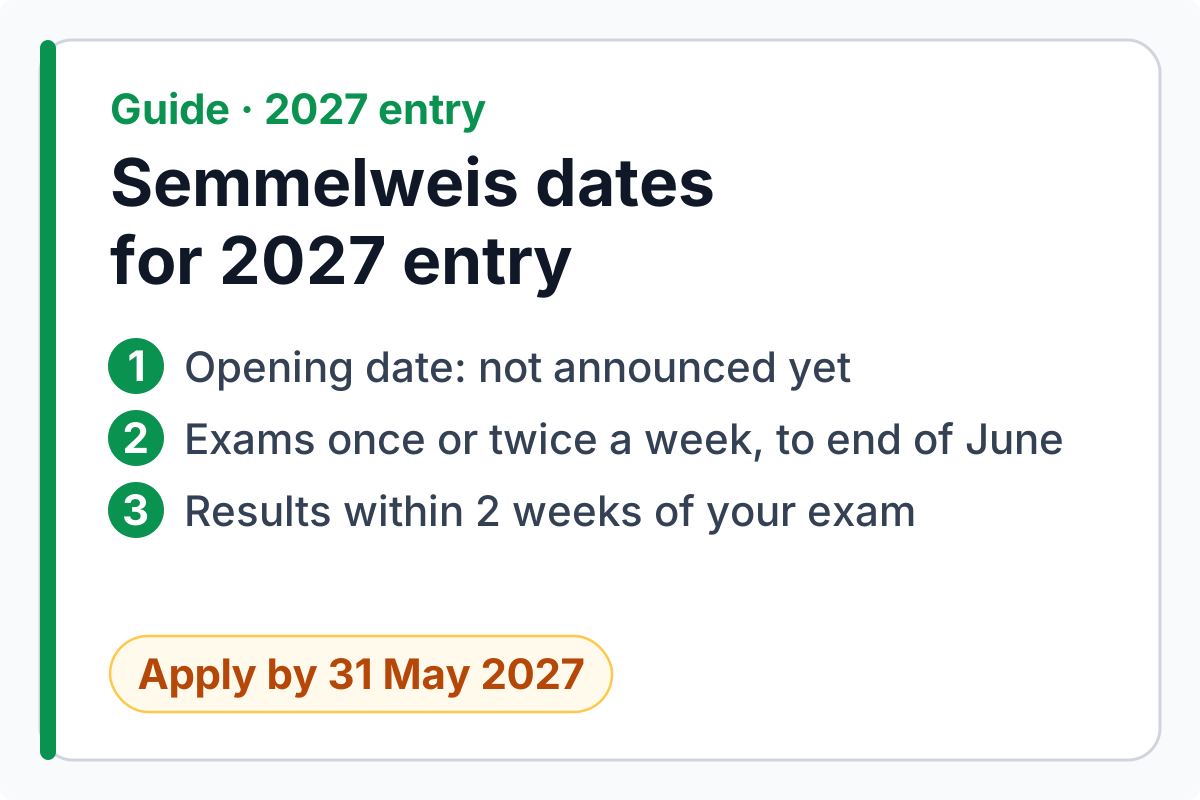
Semmelweis Dates for 2027 Entry
Apply to Semmelweis by 31 May 2027. When applications open, the two official wordings of the exam window, booking a date on SEMAPHOR, the one-week gap before a second sitting, and when you hear.
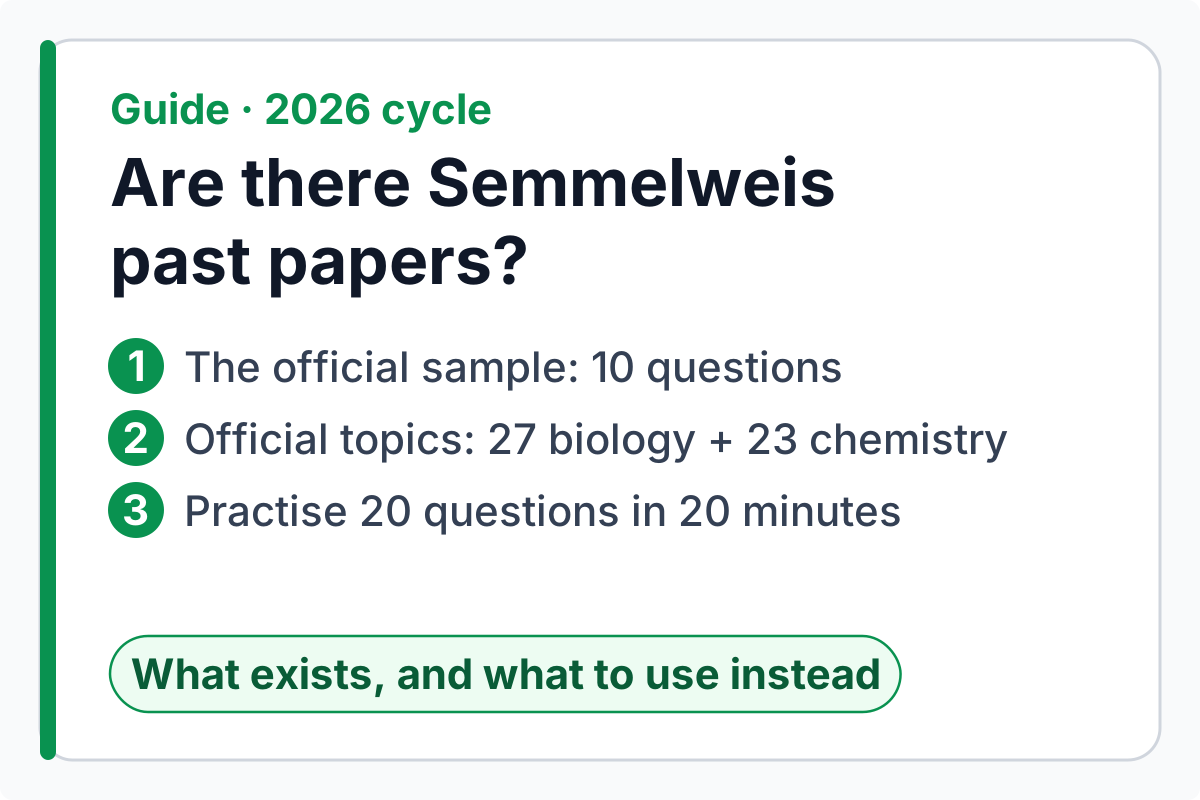
Are There Semmelweis Past Papers?
Semmelweis does not publish past papers. What it does offer (a 10-question sample test and two topic lists), what the paid 2026 exam paper files really are, and what to practise with instead.
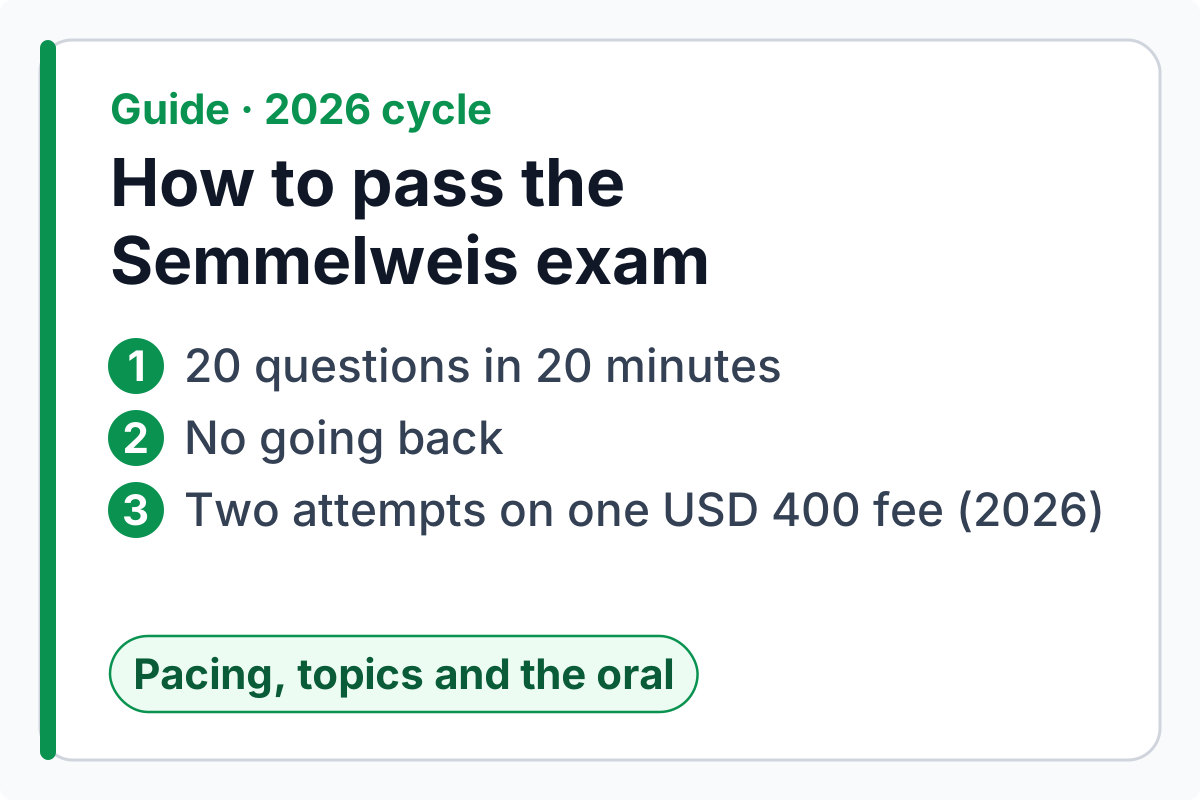
How to Pass the Semmelweis Entrance Exam
How the four Semmelweis tests work, what a wrong answer costs, how to prepare in three steps, exam-day tech, two sittings and the oral. 2026 cycle facts.